Click to Enlarge
Click to Enlarge
Our client, who has asked to remain anonymous, is a chain of retail stores that supply home furnishing and supplies for home improvement. They have grown rapidly over the past ten years and are re-configuring their distribution facilities to keep up with the business.
The company distributes almost 20,000 SKUs and several hundred new SKUs are added each month.
Recently our client moved its domestic distribution to a new facility, from which it supplies nineteen stores. The DC ships to 12–18 stores a day, with each store getting a dedicated truckload. Stores are open for business every day.
Now that the move has been successfully completed, management is working to tune the warehouse for greater efficiency. This is a challenge because plans must account for a growth rate of 8–10 per cent.
The warehouse is a large rectangle with aisles oriented along the shorter side. Receiving and shipping are on the same (long) side of the building.
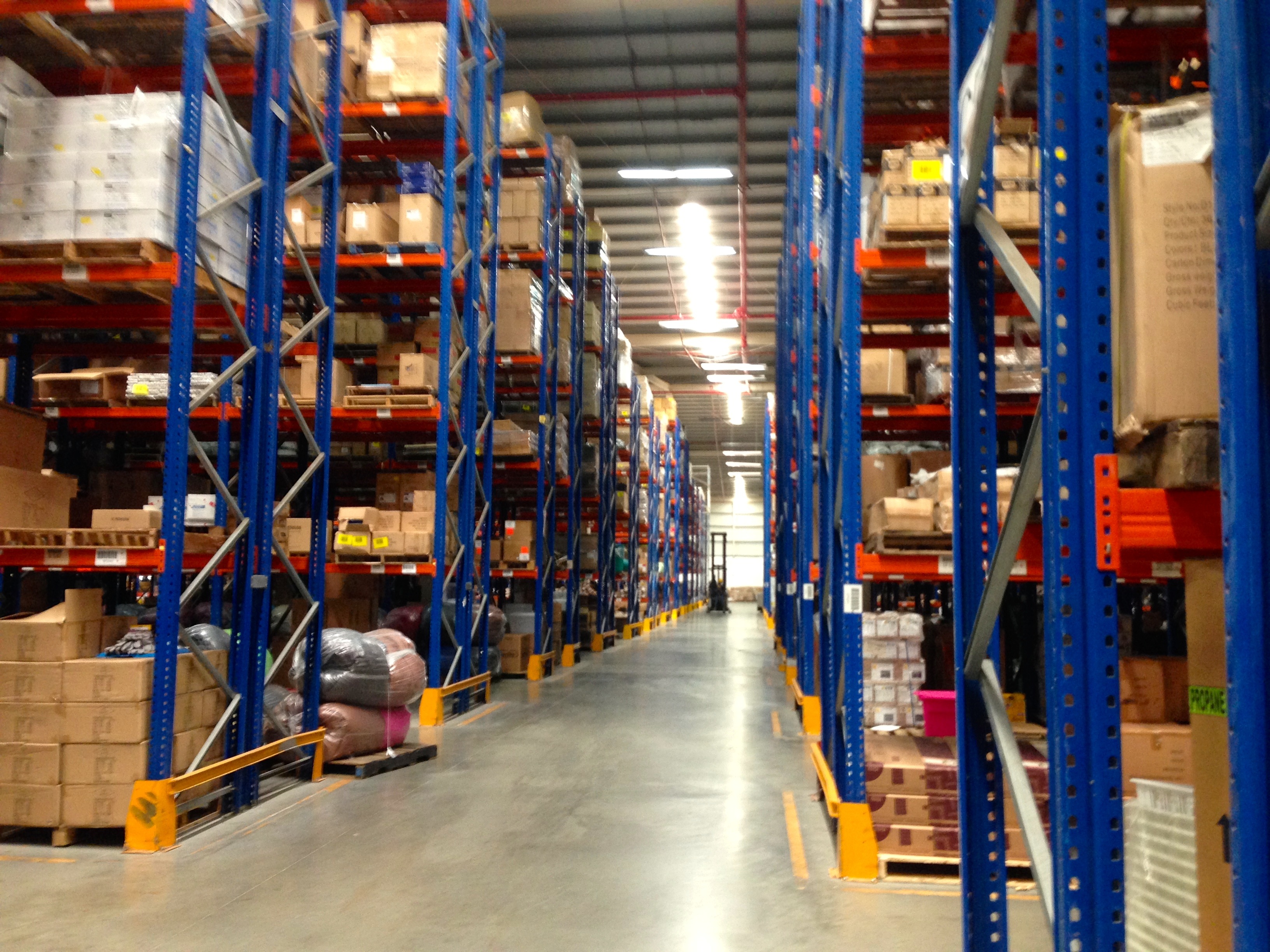
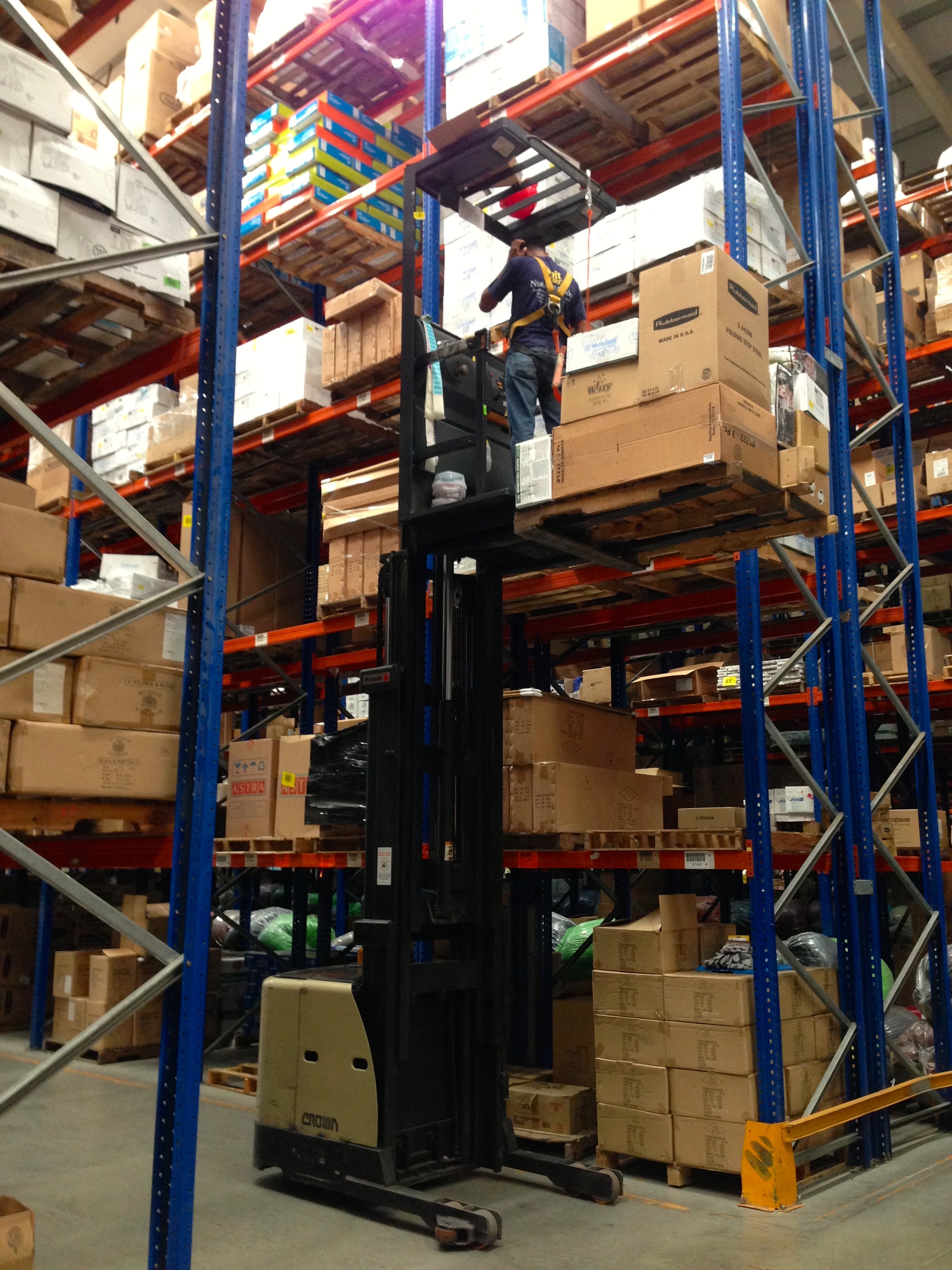
Most of the warehouse holds SKUs in pallet rack either 5 or 6 levels high (the roof is pitched to help shed heavy rains typical of the region). Pickers ride on pallet trucks and build pallets, as directed by the warehouse management system. Mostly they pick cartons, but sometimes they pick pieces from the pallets.
The addressing scheme in rack follows a common convention: The address “AB11A1” breaks down as follows: A: Section; B: Aisle within that section; 11: Bay number (a “bay” is a rack opening); A: Bay Level (from bottom to top: A, B, C, D, etc.); 1: Position within the bay (each bay has two pallet positions).
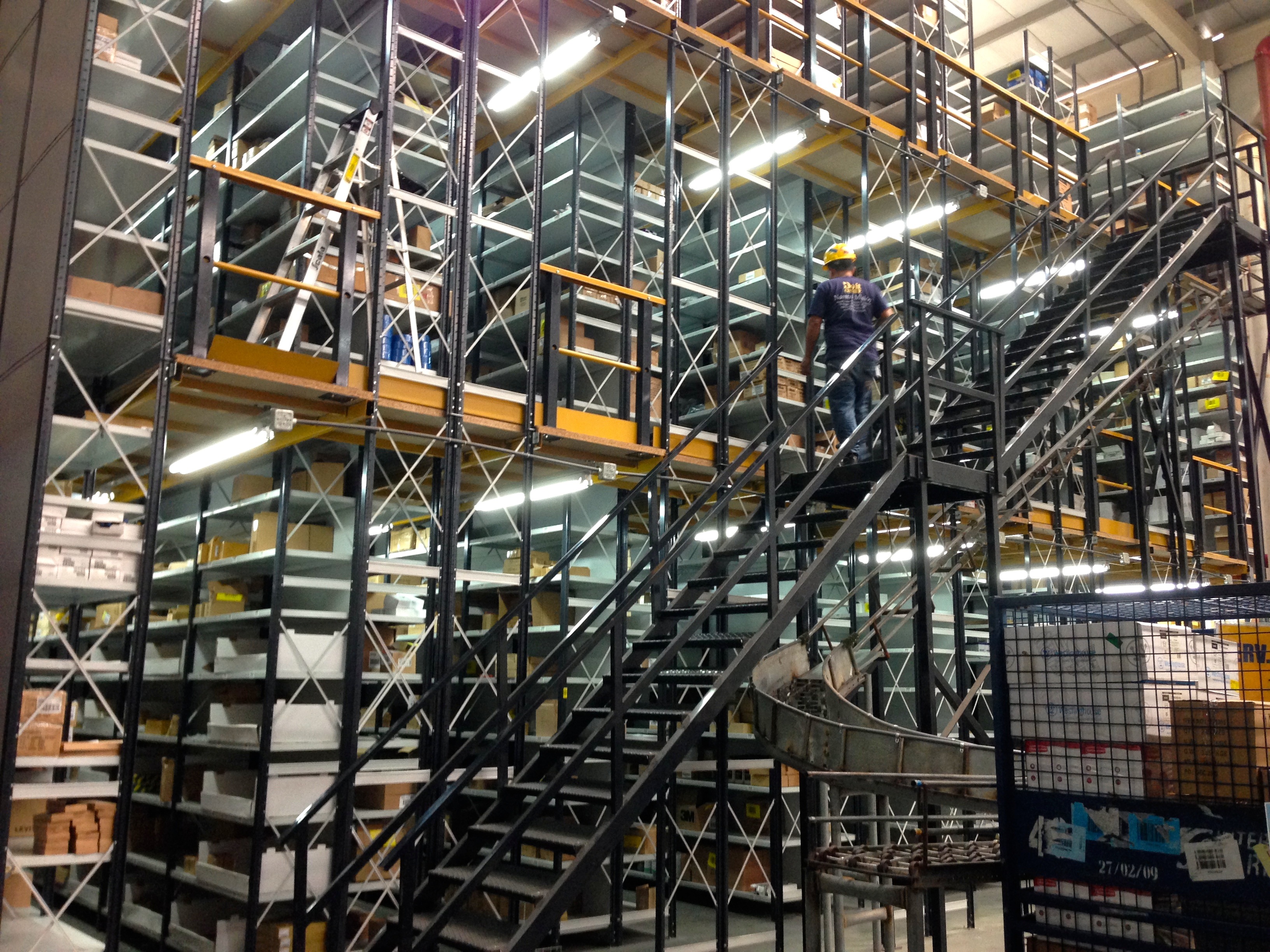
Smaller product is picked from shelving within a 3-level mezzanine area. For products in the mezzanine, this represents the entire warehouse supply (they are not restocked from elsewhere in the warehouse).
Each of the three levels of the mezzanine has six aisles, with 6 bays per aisle. Each bay has 8 shelves, with shelf #4, counting from the bottom, the most convenient. All shelves are of the same dimensions: 15 cm deep, 125 cm wide, 35 cm high. Each shelf is divided equally into 3 addressed locations.
The ground level of the mezzanine is level K, then L, then M. From left to right in the layout the layout), the aisles of mezzanine are addressed A through F. Within an aisle, from bottom to top of the layout, bays are numbered 11, 13, 15, etc. on the left-hand side and, immediately opposite, on the right-hand side, 12, 14, 16, etc. Within a bay the shelves are addressed A through H starting from the lowest.
Product is currently organized by product family: hand tools, plumbing, electrical, etc.
Management is considering installing some carton flow rack but is uncertain how much to buy or what the benefits might be. No details have been decided yet.
There are three distinct versions of picking. In the case-pick area, pickers on tuggers pick A and B levels only. Pickers with stock-pickers pick C, D, E, and F levels. Pickers without equipment pick small parts from the mezzanine.
Pickers pick for one store at a time in their established zones. When the tasks for a store are finished, the handheld will automatically switch to the next store.
Management estimates that picking from the ground floor saves about 18 seconds per pick compared to picking from higher levels. Restocking takes only “a few minutes”, but there is always a queue of restock requests and so it takes 24–48 hours from the time a restock is requested until it is actually executed.
The pick rate in the mezzanine is currently about 32 picks per person-hour.
For each sub-project be sure to discuss how to implement and maintain your suggestions.
Reminder: All data from the client are confidential and not to be shared outside the needs of the project.